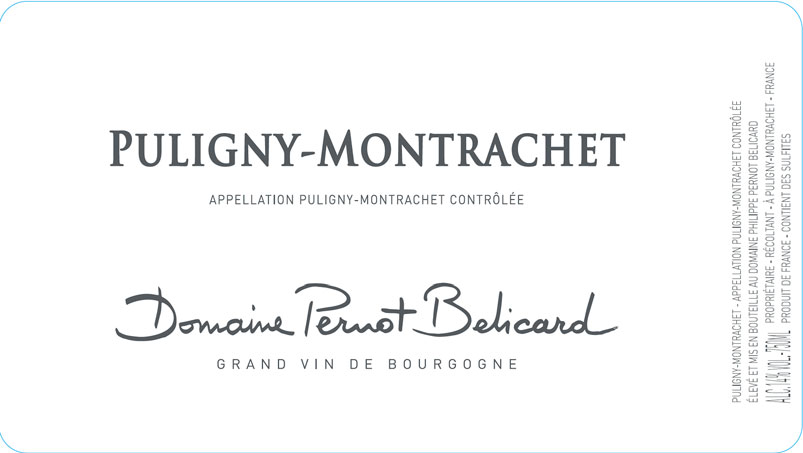
The grapes for the Composition Parcellaire come from the village of Puligny Montrachet, from 8 different small parcels for a total of 3.08 acres. (1.25 hectares):
Les Houlières : 0.19 hectares planted in 1978, Rootstock SO 4.
La Rue Aux Vaches : 0.04 hectares planted in 2000, Rootstock 3309 C.
Les Boudrières : 0.32 hectares planted in 1957, 1974 and 1982, Rootstock 3309C.
Les Boudrières : 0.11 hectares planted in 1973, Rootstock 3309 C.
Meix Pelletier : 0.09 hectares planted in 1955, Rootstock 3309 C.
Paupillot :0.16 hectares planted in 1962,1967 and 1982, Rootstock 3309 C.
Paupillot : 0.09 hectares planted in 1987, Rootstock 3309 C.
Corvées des Vignes : 0.25 hectares planted in 1964, Rootstock 5BB.
An expressive nose showing floral aromas, butter and woody notes. The mouth is round and suave with fruity notes and great minerality.
Sole Meunière, Bresse Poultry with morels, Livarot cheese
"
Sad to say, but these days, when you can find top-notch village Puligny-Montrachet for under a $100, it qualifies as a bargain. Unsurprisingly given the producer and vintage, Pernot-Belicard’s rendition, from 10 parcels throughout the AOC, is stunning. It captures your attention with great aromatics and keeps it with a finesse-filled combination of delicate, peach-like fruitiness combined with mineral accents. The vibrancy of the vintage helps keep it all together and balanced. This long and refined wine explains why Puligny-Montrachet has the lofty reputation it does. Drink now for its freshness and youthful exuberance or cellar it for five or so years and watch more complexity emerge. - Michael Apstein
- Apstein, on Wine (September 2nd 2026), 95 points
This small six-hectare domaine located in the heart of Puligny-Montrachet is making rapid strides. Philippe Pernot (a scion of the Paul Pernot dynasty) launched the Pernot-Belicard label in 2009 after ...
Read More